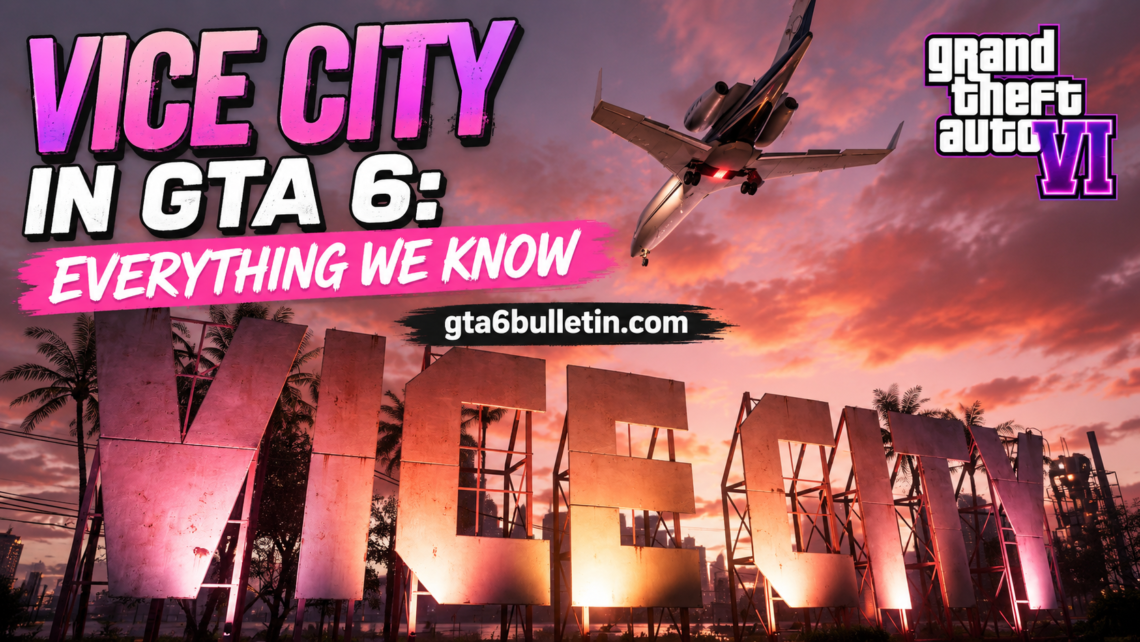
Every mainline Grand Theft Auto game gets remembered by its city first and its missions second, and Vice City has always had a bigger hold on the fanbase than most. Its return has been the single most requested thing from Rockstar for over two decades, and now it’s actually happening, rebuilt from the ground up for the state of Leonida, Rockstar’s fictional take on modern Florida.
This isn’t the neon drenched 1980s playground longtime fans remember from 2002. Rockstar has rebuilt Vice City as a present day metropolis, and everything shown across two trailers and the official GTA 6 website points to a city with far more scale, detail, and cultural texture than anything the series has attempted before.
This article covers exactly what’s confirmed about Vice City so far, straight from Rockstar’s own material, with community theories kept clearly separate from fact. also you can check our article GTA 6 Map Explained if you want to know each locations of GTA 6.
What Is Vice City in GTA 6?
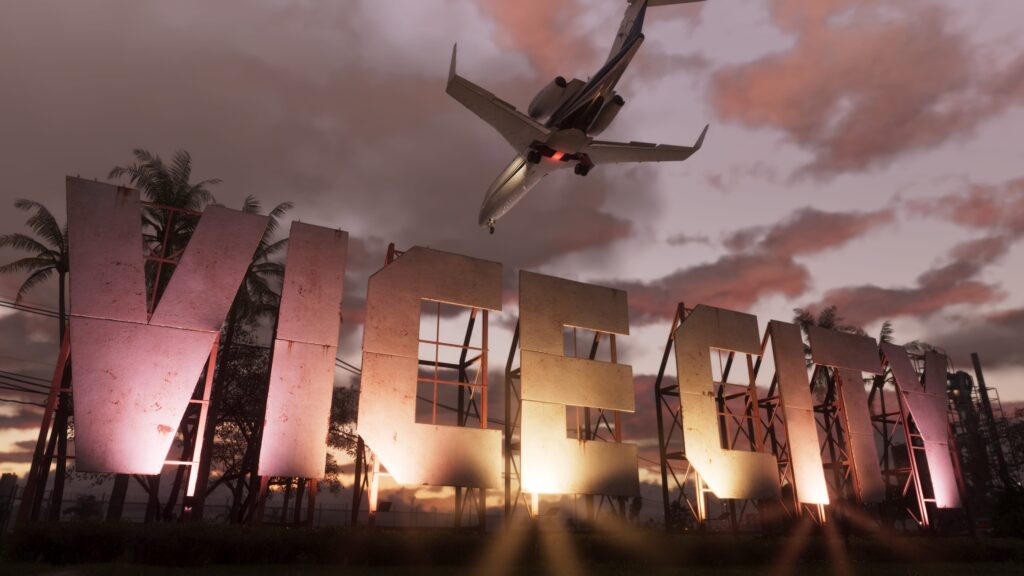
Vice City is the main metropolitan area of Grand Theft Auto VI, and it sits inside the wider fictional state of Leonida. Rockstar’s official website places it specifically within Vice-Dale County, a name that nods directly to the real Miami-Dade County it’s modeled on.
Within GTA 6’s world, Vice City functions the way Los Santos did in GTA V, the central hub most of the marketing and, presumably, most of the story revolves around. It’s not the entire game, though. Leonida also includes the Leonida Keys, the swampy Grassrivers region, and other confirmed areas, but Vice City is clearly positioned as the beating heart of the state, the place Rockstar keeps coming back to across every trailer released so far.
Vice City’s Real Life Inspiration
Rockstar has never hidden where its ideas come from, and Vice City’s connection to Miami is about as direct as the series gets. The official website’s own description leans into it: pastel Art Deco hotels, bright white sand, and the kind of oceanfront glamour that immediately calls South Beach to mind.
That Art Deco identity isn’t subtle. Trailer footage shows a beachfront strip built from the same pastel color palette and geometric architecture that defines Ocean Drive in real life Miami Beach. Layered on top of that is the nightlife culture Miami is famous for, and the trailers spend real time on glowing bar strips and packed sidewalks after dark.
Rockstar has also built cultural specificity into the city rather than treating it as a generic beach town. The official site describes Little Cuba’s bustling panaderías, the bakeries that define real Miami’s Cuban American neighborhoods, and trailer footage includes murals connected to Haitian culture in another part of the city. None of this is exaggerated for the sake of spectacle. It reads as Rockstar trying to capture Miami’s actual diversity, not just its postcard image.
Vice City Compared to the Original GTA: Vice City
The jump from 2002’s Vice City to this version is enormous, and not just because of graphics. The original ran on the PS2 era engine behind GTA III, with a small, tightly packed map and a fixed 1980s setting built around Tommy Vercetti’s rise through the criminal underworld.
GTA 6’s Vice City is a present day city, full stop. Trailer footage shows smartphones, modern vehicles, and contemporary fashion rather than synths and palm trees nostalgia. That alone changes the entire feel of the place, even before accounting for the technical leap between console generations.
Traffic density, pedestrian behavior, and environmental detail all look far more advanced than anything the original could attempt on PS2 era hardware. Aerial shots in Trailer 2 show packed highways and a skyline dense enough to rival a real financial district. Rockstar hasn’t published exact population figures or map measurements, so avoid trusting any specific size comparison you see online, but the visual density alone marks a clear generational leap from the original game.
Confirmed Areas and Landmarks of Vice City in GTA 6
Rockstar’s official website and both trailers have named or clearly shown several distinct parts of Vice City. Here’s what’s actually confirmed, as opposed to community labeled.
Ocean Beach is confirmed directly by name on Rockstar’s official site, described with its pastel Art Deco hotels and white sand shoreline. It sits at the southern end of the city and is modeled on Miami Beach’s South Beach neighborhood.
Little Cuba is also named directly in Rockstar’s own website copy, described through its panaderías and general cultural atmosphere, tied to Miami’s Little Havana as its real world basis.
Vice City Port is confirmed by name as well, with Rockstar’s own description calling it the cruise ship capital of the world, suggesting a working port filled with docked cruise liners rather than just background scenery.
Vice City International Airport appears in trailer footage and is treated as a functioning part of the map rather than a set piece, giving the city a confirmed aviation hub.
A handful of other neighborhoods, commonly labeled South Beach, Downtown, and a district connected to Haitian culture, show up clearly in trailer footage, though the exact in game names Rockstar intends to use for some of these haven’t been nailed down with the same certainty as Ocean Beach, Little Cuba, and the Port. Community trackers have proposed names for these areas based on visual analysis, and while those labels are useful shorthand, they should be treated as community naming rather than confirmed Rockstar terminology until the studio states them directly.
Beaches and Waterfront of Vice City in GTA 6
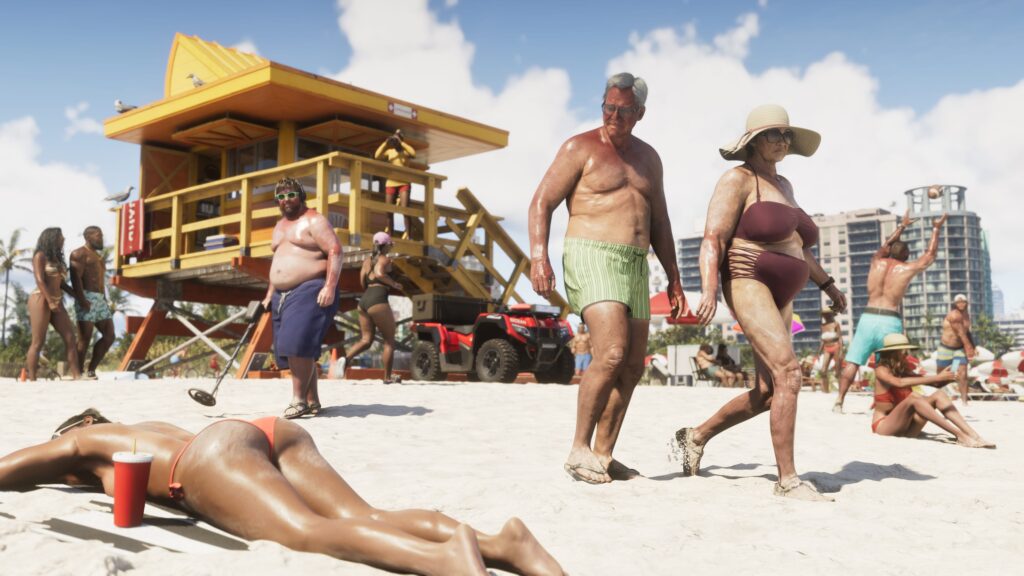
Water is everywhere in Vice City’s marketing, and that tracks with how much of Leonida’s geography revolves around coastline. Ocean Beach anchors the confirmed beach content, showing white sand, oceanfront hotels, and a boardwalk style strip that draws heavily on real South Beach.
Boats show up constantly across both trailers, from small personal watercraft to larger vessels near the port, and the Vice City Port itself is described as a major cruise hub rather than just a shipping dock. Trailer footage also shows casual beachgoers and tourists along the shoreline, reinforcing that this coastline is meant to feel like a lived in tourist destination, not just a scenic backdrop.
Downtown Vice City in GTA 6
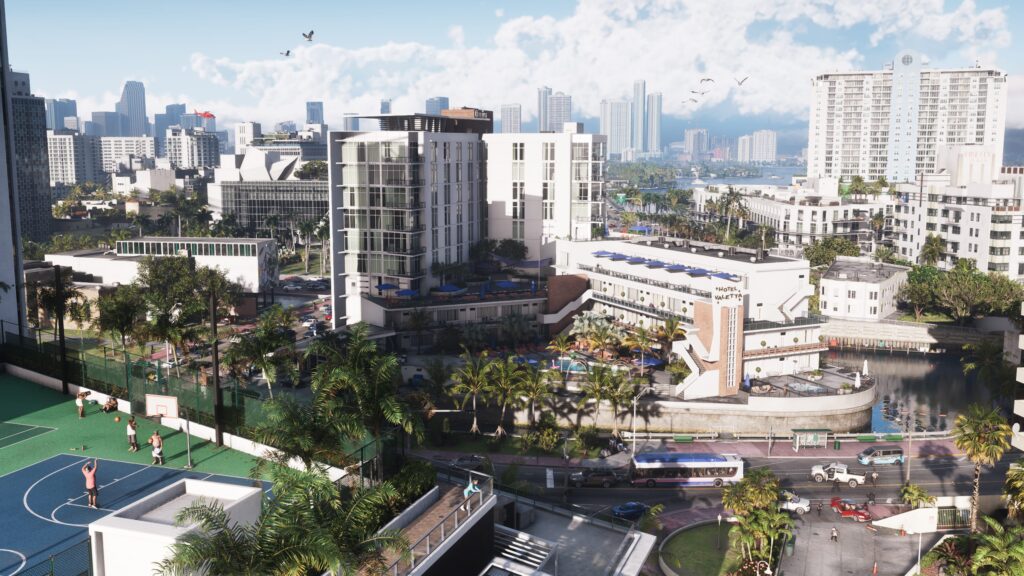
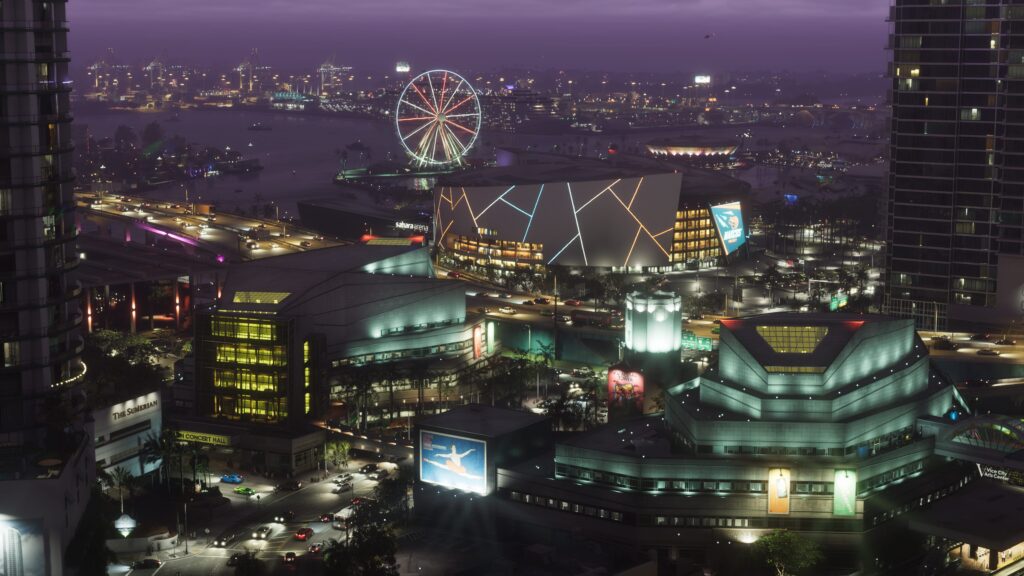
Aerial shots in Trailer 2 give the clearest look at Vice City’s downtown core, and it’s a genuine step up in scale from anything the series has shown before. Dense clusters of glass towers connect to elevated highways, giving the skyline a real financial district weight rather than a handful of scattered skyscrapers.
Community analysis has connected this district’s visual style to Miami’s Brickell neighborhood, real Miami’s own financial hub, though Rockstar hasn’t attached an official name to this specific downtown zone the way it has with Ocean Beach or Little Cuba. What is confirmed is the sheer density of the area. Traffic, building height, and elevated roadways all point to downtown functioning as the city’s most urban, most vertical district.
Nightlife in Vice City in GTA 6

Vice City’s nightlife identity carries directly over from the original game’s reputation, just modernized. Trailer footage shows glowing bar and club strips, packed sidewalks after dark, and neon signage that echoes the visual language of the 2002 original without copying it outright.
Music culture also plays a visible role. Confirmed supporting characters tied to Vice City’s music scene, including record label figures and a rap duo shown in official material, point toward nightlife functioning as more than just a backdrop. It looks like a real part of the city’s economy and culture, not just a place to drive past.
Transportation in Vice City in GTA 6
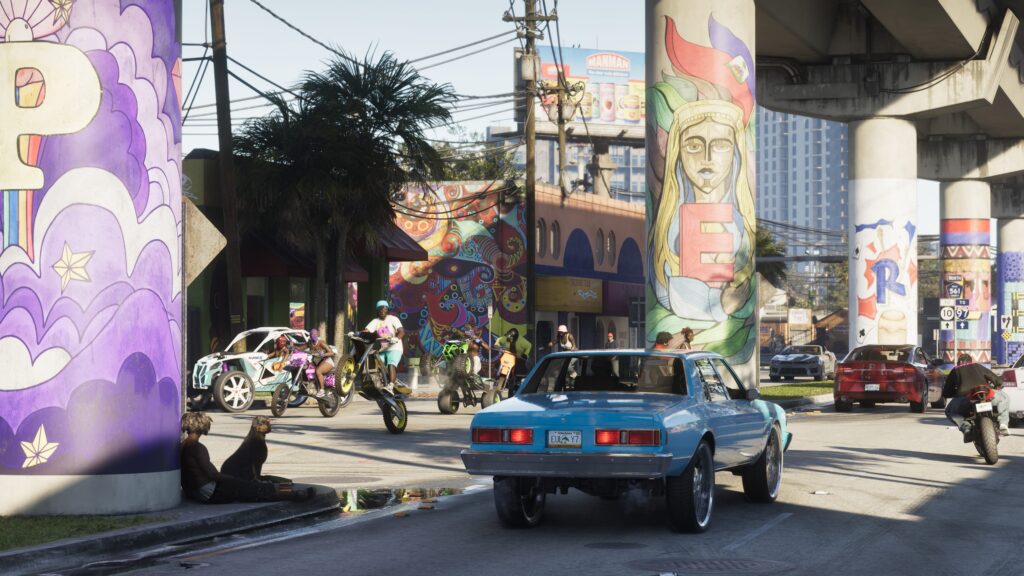
Roads and highways dominate most of the confirmed footage, including the elevated highway systems visible in downtown’s aerial shots. Bridges connect different parts of the city, and boats are confirmed as a genuine transportation option given how much of Leonida’s geography involves water.
Rockstar has not detailed a specific public transportation system for Vice City itself with the same certainty as the road and water networks shown so far. Any specific claims about bus routes, subway lines, or fixed transit schedules inside the city should be treated as unconfirmed until Rockstar shows more.
Businesses and Commercial Areas in Vice City in GTA 6
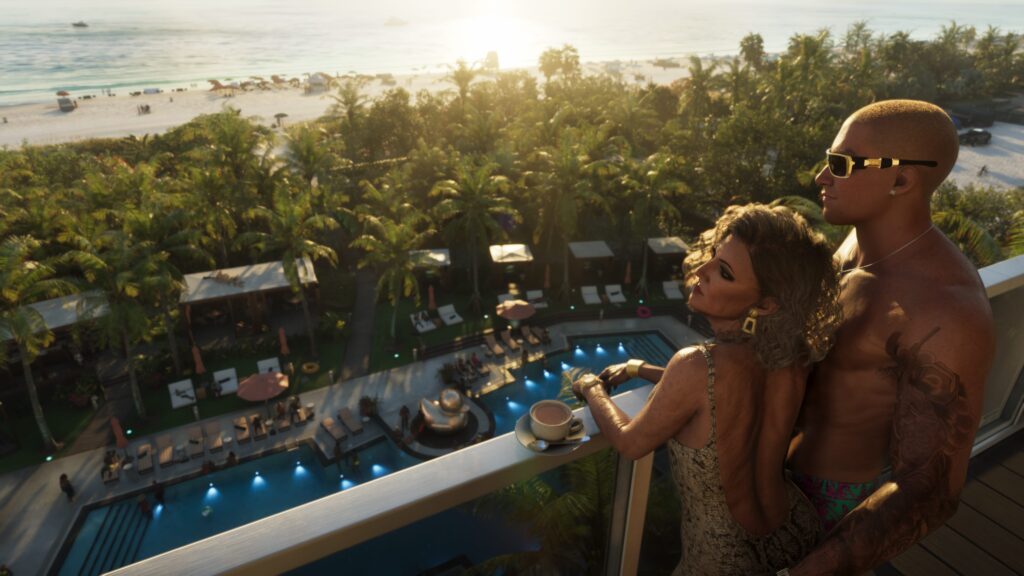
Rockstar’s official material shows Vice City functioning as a real economy, not just a set of empty streets. The port operates as a commercial and tourism hub. Little Cuba’s panaderías are called out directly in official copy. Confirmed supporting characters run businesses that include a strip club, a recording studio, and real estate ventures, according to Rockstar’s own character bios, all based within Vice City.
Rockstar has not published a specific list of enterable businesses or their exact locations across the city, so treat any detailed shopping or business directory you see online as speculation rather than confirmed fact until official material backs it up directly.
Wildlife Around Vice City in GTA 6
Vice City itself is an urban environment, but Leonida’s surrounding wetlands sit close enough that the contrast matters. Trailer footage tied to the wider Grassrivers region shows alligators and dense mangrove terrain, a sharp shift from the city’s glass and concrete just a short drive away.
That proximity is part of what makes Leonida feel distinct from past GTA settings. Rockstar hasn’t shown wildlife wandering into Vice City’s urban core directly, but the surrounding natural environments are close enough that the two settings clearly exist side by side rather than being separated by an artificial distance.
How Vice City Fits Into Leonida
Vice City is the anchor of Leonida, but it’s not the whole state. Rockstar’s marketing has confirmed additional regions including the Leonida Keys, a chain of islands south of the city where protagonists Jason and Lucia’s story begins, and Grassrivers, a swampland region distinct from anything urban.
Travel between these areas appears to be seamless, based on how the trailers move between environments without any visible loading transitions. That points to Vice City functioning as one connected piece of a much larger state rather than an isolated, self-contained map, similar in spirit to how Los Santos connected to Blaine County in GTA V, just built at a larger scale.
What Makes Vice City Different From GTA 5’s Los Santos?
Los Santos drew from a satirical version of Los Angeles, built around entertainment industry culture, sprawling highways, and a desert climate on its outskirts. Vice City pulls from a completely different real world template, and that shows in nearly every visual choice Rockstar has made so far.
Where Los Santos leaned into dry heat and urban sprawl, Vice City leans into tropical humidity, oceanfront density, and Art Deco color. The architecture alone marks a clear split, pastel geometric buildings instead of Los Santos’ mix of modern glass and Hollywood adjacent sprawl. Culturally, Vice City’s Cuban and Haitian influenced neighborhoods give it a different texture than anything Los Santos attempted, which leaned more on entertainment industry satire than specific immigrant community representation.
Neither setting is objectively better than the other, they’re just built from different real world material. What’s clear is that Rockstar isn’t reusing Los Santos’ formula here. Vice City is being built as its own distinct place with its own visual and cultural identity.
Gameplay Opportunities
Based purely on what’s been officially shown, Vice City supports a wide range of activity types. Driving is the obvious one, given how much of both trailers involves cars moving through dense traffic and elevated highways. Boating is confirmed too, given the port, the coastline, and the general emphasis on water throughout Leonida.
Exploration on foot looks well supported as well, with trailer footage showing characters walking through nightlife districts, beach areas, and residential streets. Social environments, bars, clubs, and the businesses tied to confirmed supporting characters, all point toward Vice City functioning as a place to hang out, not just drive through on the way to a mission marker.
Rockstar has not detailed specific mission structures or confirmed exactly which activities will be available where, so treat any claims about specific minigames, unlockable venues, or activity mechanics as unconfirmed until official gameplay footage arrives.
Frequently Asked Questions
Is Vice City the main city in GTA 6?
Yes. Vice City is the primary metropolitan area in GTA 6 and the central hub of Rockstar’s marketing so far, though it sits within the larger state of Leonida rather than being the entire game world.
Is GTA 6 set in Miami?
Not literally. GTA 6 is set in the fictional state of Leonida, and Vice City within it is directly inspired by Miami, Florida, but neither carries the real city’s name or exact geography.
Can players explore the entire city? Rockstar has confirmed an open world without loading screens between areas, which strongly suggests Vice City will be fully explorable, though the studio hasn’t detailed specific restrictions or story gated areas.
Is Vice City bigger than before?
It’s clearly more detailed and visually dense than the 2002 original, based on trailer footage. Rockstar has not published official size figures, so avoid trusting specific square mileage claims you see elsewhere.
What real city inspired Vice City?
Miami, Florida, particularly South Beach’s Art Deco architecture and Miami Dade County’s cultural neighborhoods, based on Rockstar’s own official descriptions.
Is Vice City part of Leonida?
Yes. Vice City sits within Vice Dale County, part of the fictional state of Leonida, alongside other confirmed regions like the Leonida Keys and Grassrivers.
What locations have Rockstar officially shown?
Rockstar has directly named Ocean Beach, Little Cuba, and Vice City Port on its official website, alongside Vice City International Airport shown clearly in trailer footage. Other areas seen in trailers have community assigned labels that aren’t officially confirmed yet.
Will Vice City have beaches?
Yes. Ocean Beach is confirmed directly by Rockstar, complete with white sand and Art Deco beachfront hotels modeled on Miami Beach.
How is Vice City different from Los Santos?
Vice City draws from tropical, oceanfront Miami rather than Los Santos’ Los Angeles inspired sprawl, with a distinct Art Deco architectural identity and different cultural neighborhoods.
Can you leave Vice City?
Yes. Confirmed regions like the Leonida Keys and Grassrivers exist outside the city itself, and trailer footage shows travel between these areas without visible loading screens.
Conclusion
Vice City has always been more than just a setting for this franchise, and Rockstar seems fully aware of that going into GTA 6. Everything confirmed so far, the Art Deco beachfront, the cultural specificity of neighborhoods like Little Cuba, the working port, the sheer density of its downtown skyline, points toward a city built with more care and detail than the series has ever put into a single location before.
There’s still plenty Rockstar hasn’t confirmed, from exact neighborhood names to how deep the city’s businesses and activities actually go, and that gap will close as more trailers and official material arrive before the November 19, 2026 launch. Check back on gta6bulletin.com as we update this guide with everything Rockstar reveals next.